
“We waste a quarter of our lives creating connections.
We must let life take its own course.”
— Attila Hazai: Budapest Schizo
About the Play
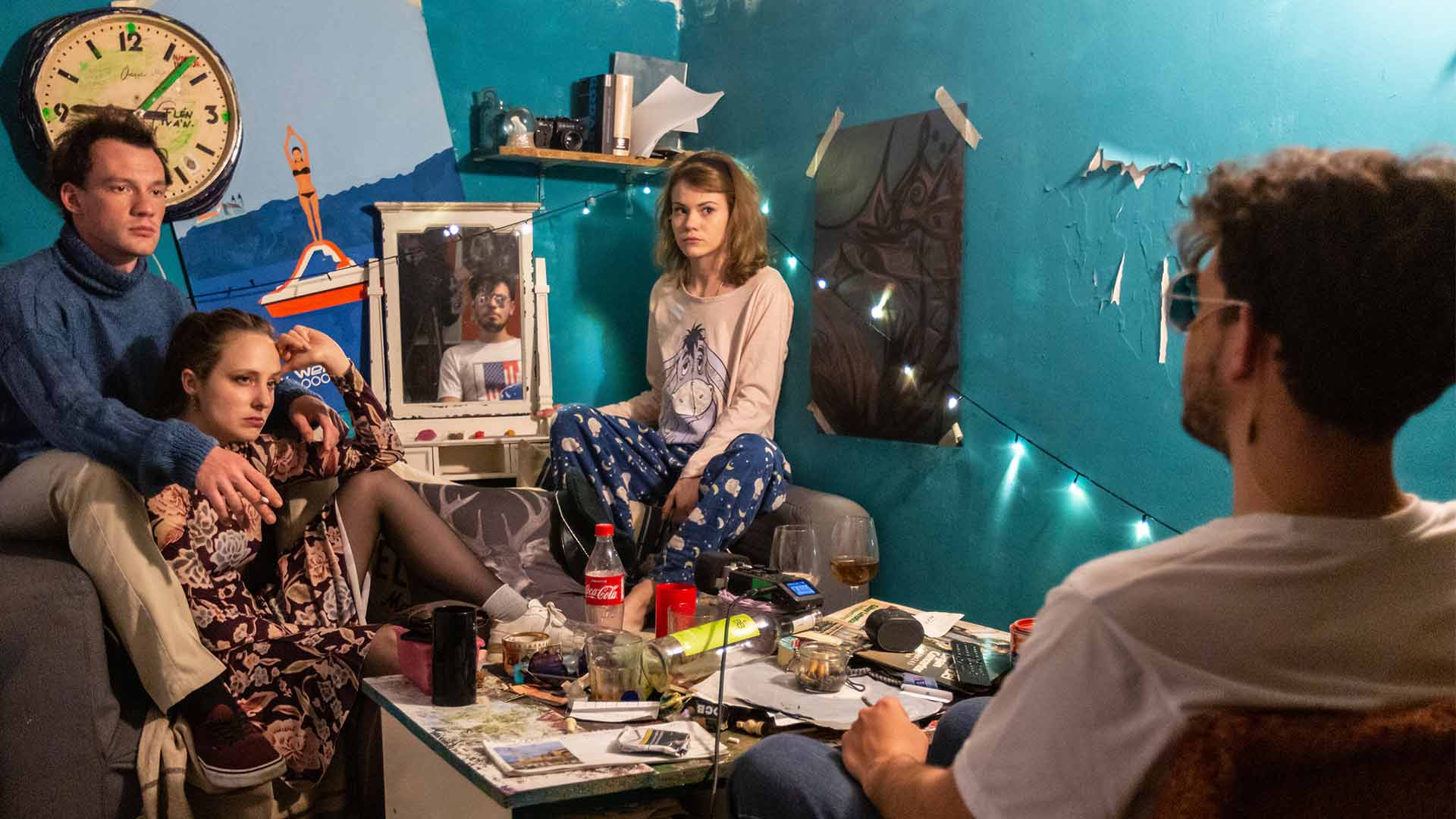
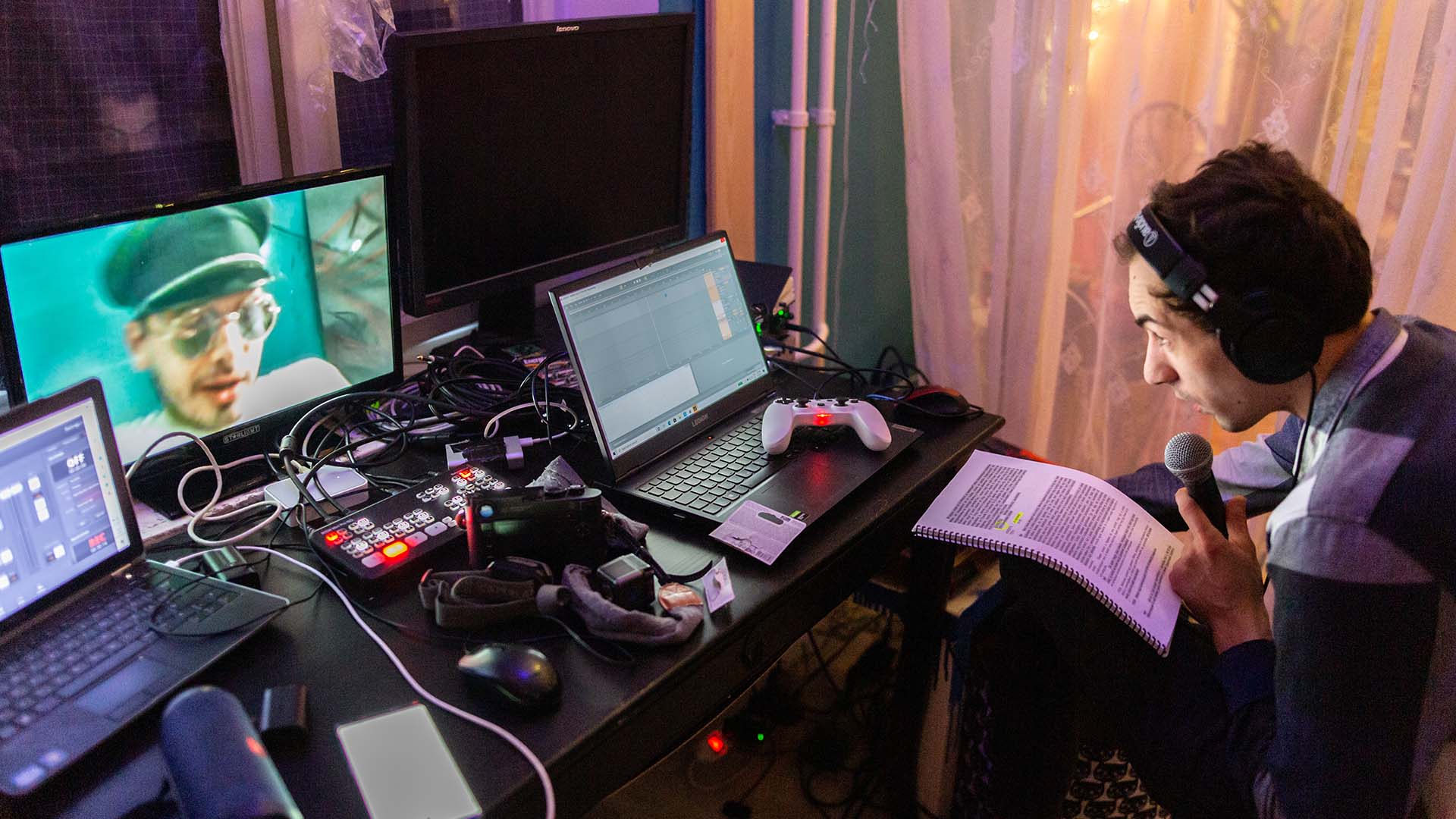
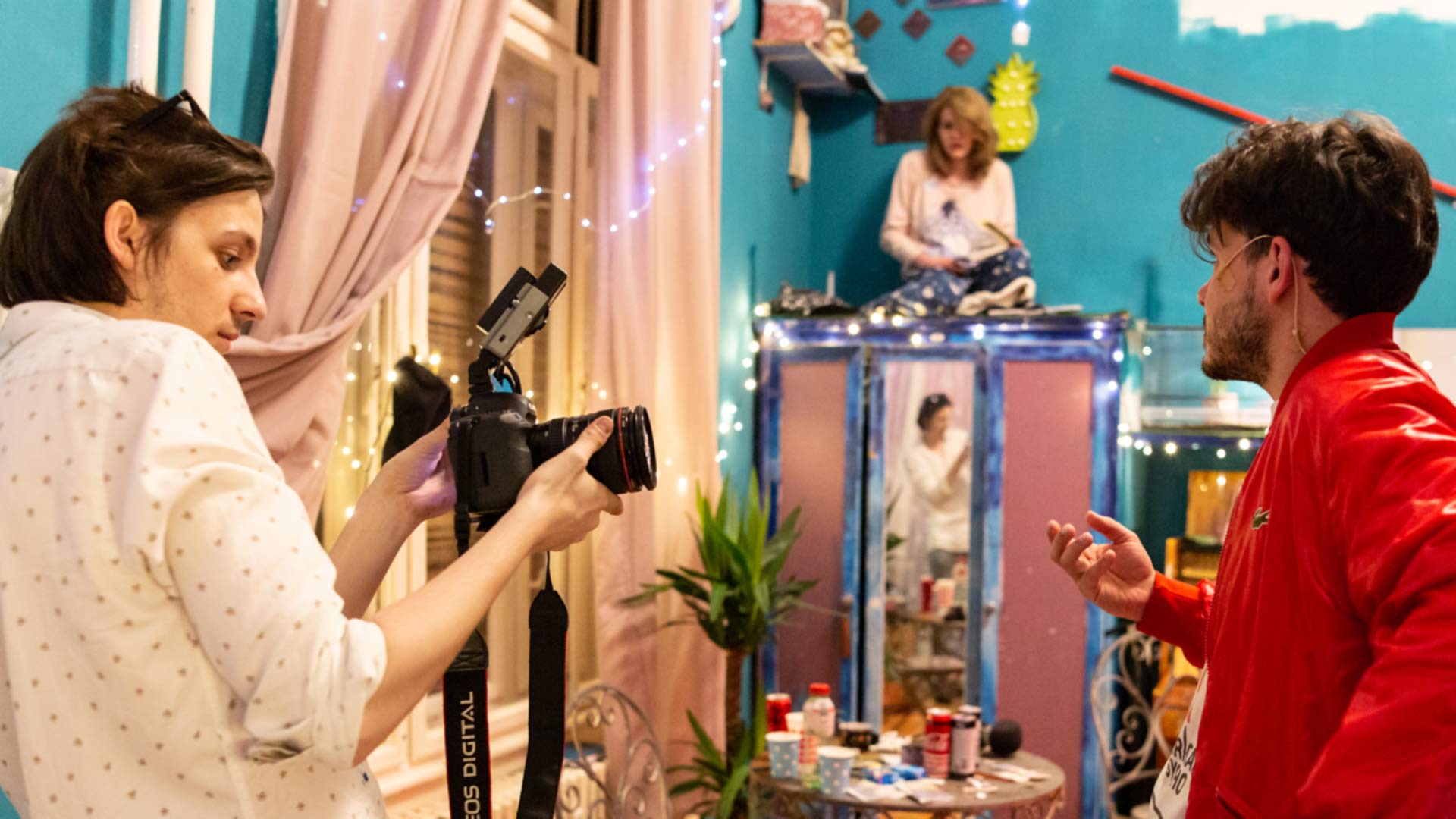
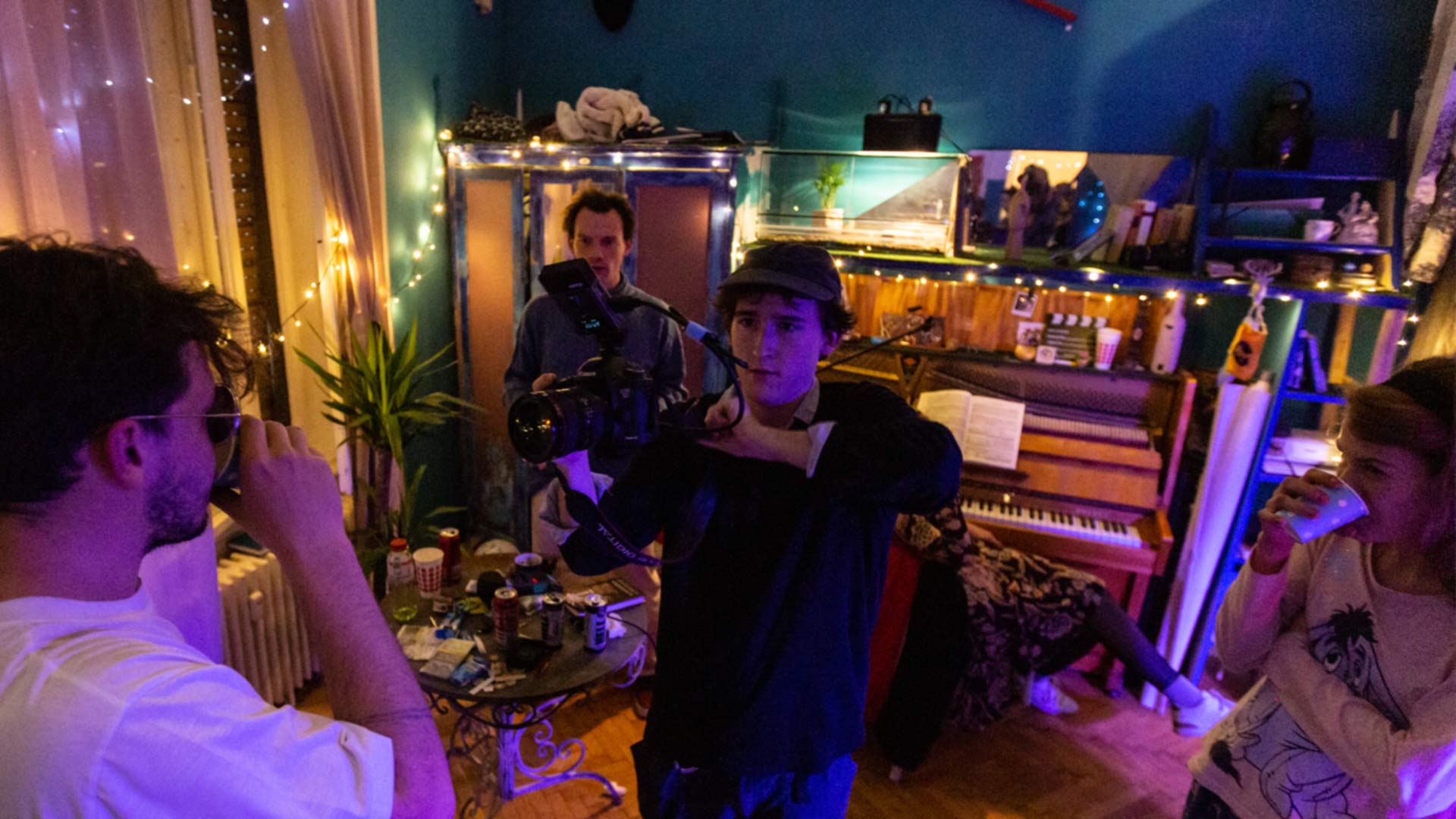
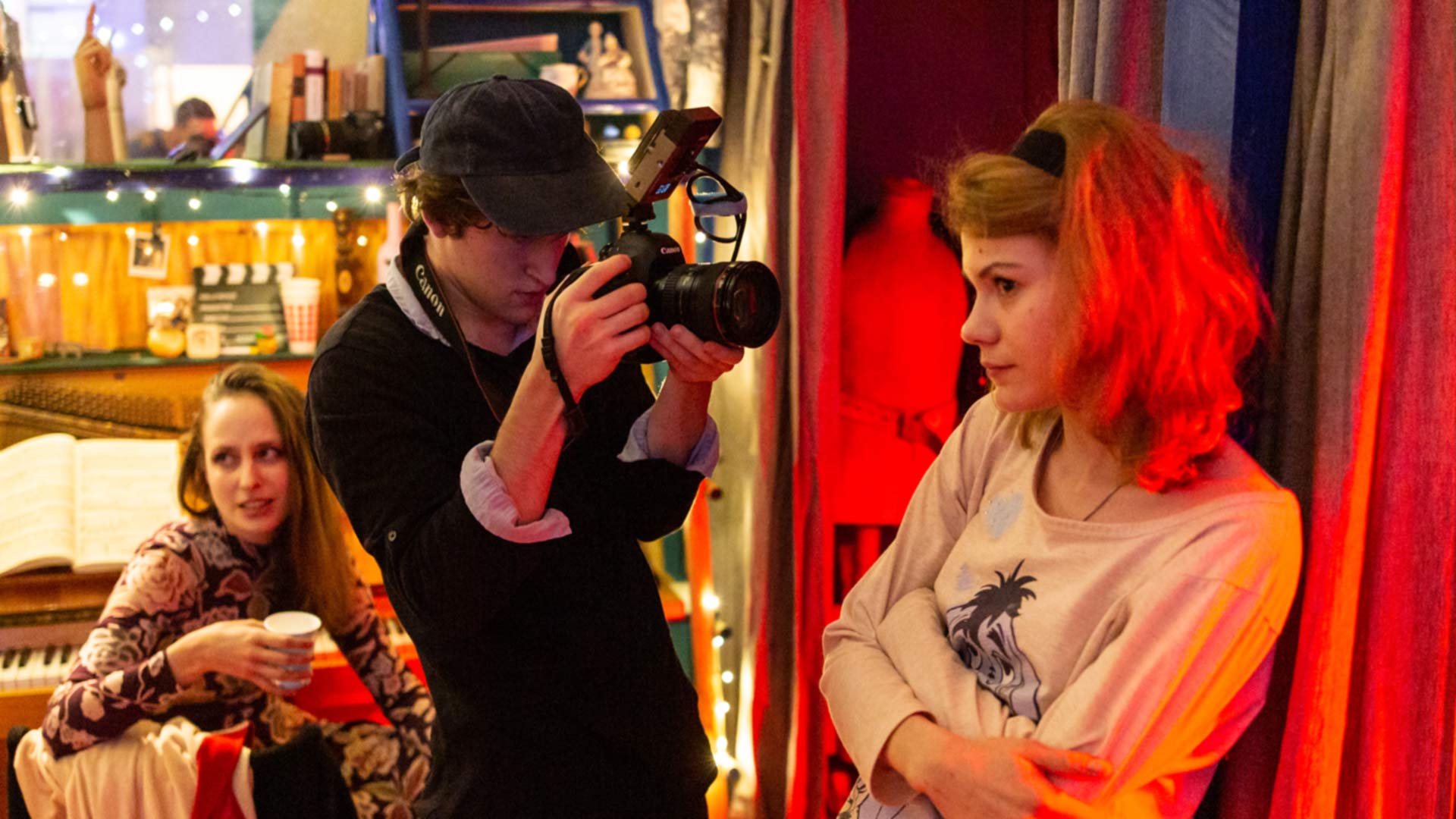
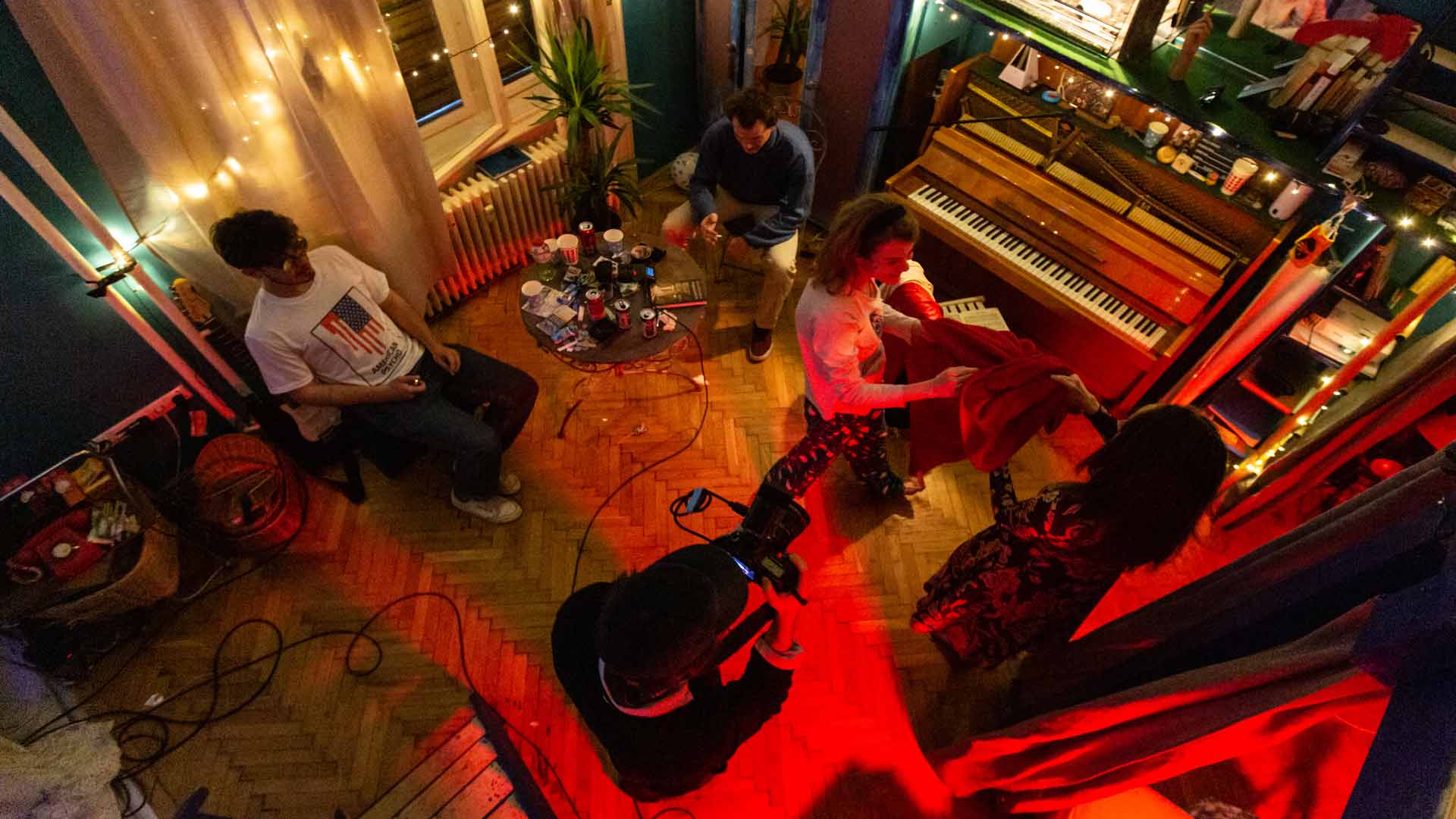
The performance unfolded in a single, two-hour, unedited long take: the cameras started rolling at 10:00 PM and followed the events without interruption. With this approach, we preserved the essential characteristics of theater—contingency, the possibility of error, and continuity—while working with cinematic tools.
Our adaptation of Attila Hazai's novel Budapest Schizo was created with the intent to merge the live, unrepeatable presence of theater with the possibilities of digital broadcasting, establishing a unique formal language composed specifically for the online space. The production was designed and executed exclusively for a live stream.
The playing area was the director's Budapest apartment, which was painted entirely blue to function as a blue screen: new locations and visual layers were created live. The performance also featured iconic songs from 1990s underground bands. The project was realized in collaboration with Manna Production, offering an experimental, genre-defying format for online performing arts.
Synopsis
The story leads the viewer into the heart of 1990s Budapest, into the drug-hazed world of a generation of twenty-something intellectuals.
The protagonist is Feri Soros, who returned to Hungary after living in America for a long time, and who attempts to color his monotonous weekdays with mind-altering substances and endless philosophizing. At the center of the plot is the relationship between Feri and his girlfriend, Krisztina, a sober university student raised in a convent. While Krisztina tries to guide the boy back to reality with loving care, Feri’s consciousness increasingly splits between his drug-fueled, "form- and story-creating" inner world and the empty substitute actions of the outside world.
The performance captures a postmodern sensibility: the "anti-speech" built on meta-communication, the state of constant standby, and the hopelessness of intellectual existence. Feri’s speed-monologues and dazed visions project a kind of "subhuman" darkness, where the search for happiness and self-destruction go hand in hand.
Can love triumph over the "Heidegger cocktail" and the constant spinning, or will the characters be lost forever in the schizoid labyrinth of the Budapest night?
Our Supporters
We would like to thank Zsófia Gúth, Endre Cserna, Adrian Samudovszky, László Bagossy, Anna Gáspár, Adrienn Erdélyi, Fanni Molnár, Boglárka Tajti, Noémi Hatala, Lili Kemény, Bennett Vilmányi, Gábor Németh, László Garaczi, Dániel Pásztor, Bernát Gloviczky, Bors Újvári, Péter Katona, Botond Lelkes, Bogi Koós, Tamás Falaty, Dániel Lang, Ramón, Douglas Jones, Gusztáv Szontagh, Tamás Katona, Tamás Perjési, Máté "Joe" Takács, Dr. Csaba Rezes, Zsófia Bódi, Bence Vétek, Dr. Attila Sándor, Dr. Orsolya Antal, Anna Gáspár, and Manna Production for their great ideas and kind assistance.